
A good timetable is one of the quietest ways to grow a fitness studio.
When classes run at the right times, with the right trainer and the right number of spots, members keep coming back. When they don't, you get half-empty classes on Monday morning and a waiting list on Wednesday night.
Many yoga, pilates and fitness studios in Malaysia still plan their timetable on a whiteboard or in a WhatsApp group with their trainers. That works at the start.
But as you add classes, trainers and members, the timetable starts to change every week. Someone is double-booked. A reformer class is overbooked. A trainer cancels and nobody knows who's covering.
Here's how to build a schedule that works for your members, your trainers and your studio.
1. Build the Timetable Around Demand
Start with when your members can actually come, not when it's convenient to teach.
For most studios, demand clusters around a few windows:
- Early morning, before work
- Lunchtime, for office workers nearby
- After work, roughly 6pm to 9pm
- Weekend mornings
A studio in Bangsar near offices may find lunchtime classes fill well, while a studio in a residential area of JB might be busiest on weekend mornings. Look at your own members before copying another studio's timetable.
Then think about level. Beginners need classes they can find easily and trust. Label them clearly, such as "Beginner Mat Pilates" or "Yoga Foundations", and keep them at consistent times so new members can build a habit.
Advanced classes can run at more specific times, because experienced members tend to plan around them.
A better approach:Put your most popular class types in your busiest time slots, then fill quieter slots with classes that suit people with flexible schedules.

2. Set a Realistic Capacity for Every Class
Capacity isn't just a number in a system. It's what keeps a class safe and enjoyable.
For reformer pilates, capacity is fixed by the number of machines. If you have eight reformers, the class is full at eight, no matter how many people want to join.
For mat classes, capacity depends on floor space and how much attention the trainer can give each person. A beginner yoga class may need fewer spots than an experienced flow class in the same room.
Once capacity is set, track how full each class gets.
Fill Rate = (Members Booked ÷ Class Capacity) × 100
Say your Tuesday 7pm reformer class has 8 spots and averages 7 bookings. That's a fill rate of about 88%. If your Thursday 11am class averages 2 out of 8, that's 25%, and worth a closer look. These figures are only examples.
3. Plan Trainer Availability and Cover
Your timetable is only as reliable as your trainers' availability.
01Collect Availability First
Ask each trainer which days and times they can teach before you build the timetable, not after. Part-time trainers often have other jobs or clients.
02Match Classes to Specialties
Not every trainer can teach every class. A reformer class needs a trainer qualified on reformers; a prenatal yoga class needs someone experienced in prenatal work.
03Agree on a Cover Process
Decide how much notice trainers must give before missing a class, and keep a list of who can cover each class type. That way, a sick trainer doesn't mean a cancelled class.
Also watch the workload. A trainer teaching five classes back to back will be tired by the last one, and members can tell.
4. Decide Which Classes Are Free, Paid or Drop-In
Most studios run a mix of class types, and members should know which is which before they turn up.
For example, a studio might offer:
- Community yoga class — free, once a month
- Mat pilates — included in membership
- Reformer pilates — paid per class
- Drop-in yoga — paid at the door
These are illustrative examples, not recommended prices or structures.
Free classes are a good way to introduce new people to your studio. Drop-ins suit visitors and people not ready to commit. But both need clear rules: whether booking is required, how payment works, and whether members get priority when a class is full.
Record payment for every paid class, even small drop-in fees. They add up, and they're easy to lose track of.
5. Communicate Timetable Changes Clearly
Changes are unavoidable. Trainers go on leave, public holidays come up, and some classes need to move.
What matters is how you tell members.
- Give as much notice as you can
- Explain what's changing and why
- Offer an alternative class
- Tell booked members directly
A simple message works well:
"Hi Mei Ling, just letting you know that this Saturday's 9am reformer class is moving to 10am because of the public holiday. Your spot is still reserved. Let us know if the new time doesn't work for you."
Post the change on Instagram or your WhatsApp group as well, but don't rely on that alone. Members who booked a specific class deserve a personal message.
6. Review the Timetable Every Month or Quarter
A timetable shouldn't stay fixed forever. Members' routines change, and so does your studio.
Once a month, look at basic numbers for each class. Every quarter, make bigger decisions about adding, moving or removing classes.
Questions to ask:
- Which classes are regularly full?
- Which classes are often under half full?
- Is there a waiting list for any time slot?
- Are any trainers overloaded?
- Do beginners have enough options?
A class that's always full might need a second session. A class that's often empty might work better at a different time, with a different trainer or as a different format.
Give new classes a fair trial of a few weeks before judging them. Members need time to notice and try them.
How VynexFit Helps
Once your timetable has more than a handful of classes, keeping it in one place saves a lot of back-and-forth.
In VynexFit, the class calendar shows all your classes in calendar or grid view, each with its trainer, time, location and capacity. You can book members into a class and see who's booked. Learn more about class scheduling.
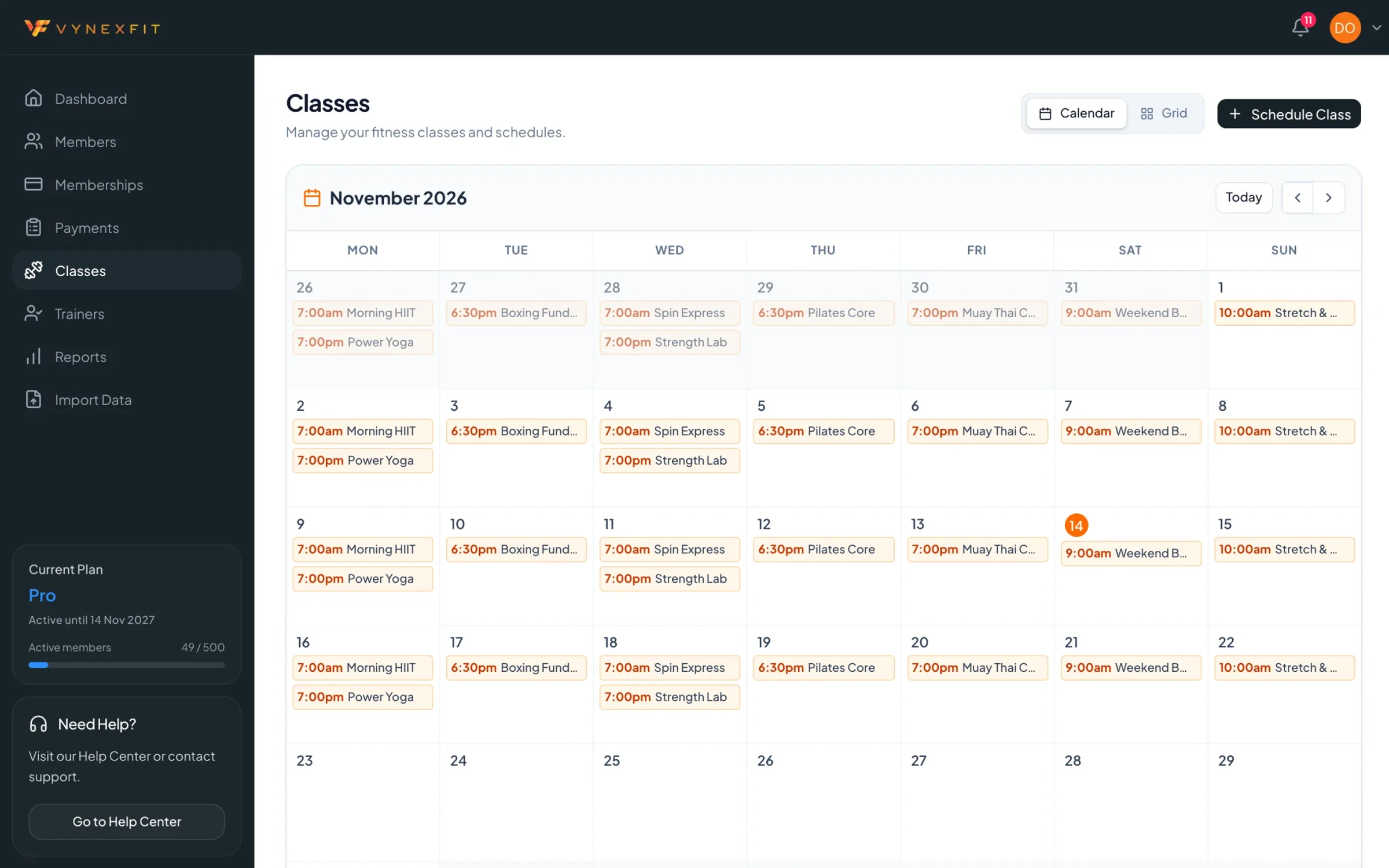
Classes can be set as free or paid, and each booking shows whether it's free, paid or unpaid, so drop-in fees don't slip through the cracks.
Trainer profiles list each trainer's specialties, which helps when you're matching classes to trainers or looking for cover.
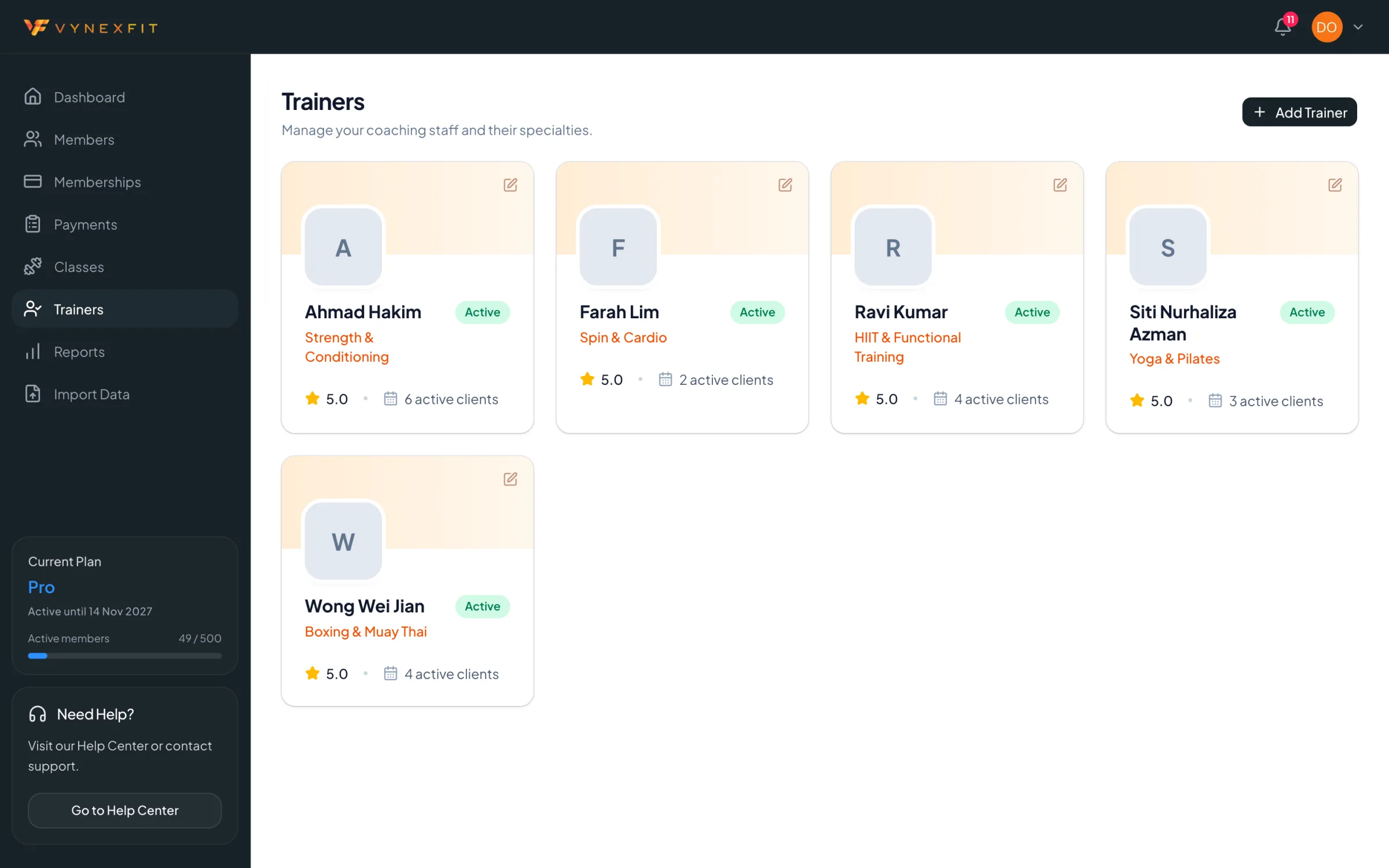
Members, memberships and payments live in the same dashboard, so you're not switching between apps. Take the product tour to see how it fits together.
FAQ
How many classes should a small studio run each week?
There's no ideal number. Start with fewer classes at the times your members want most, and add more once those classes fill regularly. It's easier to add a class than to cancel one people already attend.
How do I handle members who book but don't show up?
Write a clear cancellation policy, such as asking members to cancel a set number of hours before class, and remind members of it when they join. Track repeat no-shows, especially for classes with limited spots like reformer pilates.
Should trainers plan their own classes?
Trainers should plan the content of their classes, but the timetable itself is usually best managed by the owner or one person. That keeps the overall schedule balanced and avoids clashes.
Conclusion
A well-organised timetable keeps classes full, trainers fresh and members coming back.
Build it around demand, set realistic capacity, plan trainer cover, be clear about free and paid classes, and review it regularly. Small, steady adjustments usually work better than a complete overhaul.