
Most combat sports gyms are started by fighters and coaches, not administrators.
You opened your Muay Thai, boxing or MMA gym to teach. But somewhere along the way, you also became the person who chases payments, finds a cover coach and answers trial class enquiries at 11pm.
Combat gyms also carry admin that a regular gym doesn't. Students get hit, so emergency contacts and waivers matter more. Shared mats and gloves need serious cleaning. And many gyms run fight teams or gradings with their own fees.
When all of this lives in your head and a few WhatsApp groups, things slip.
This checklist breaks the admin into daily, weekly and monthly tasks, so nothing important depends on memory.
1. Daily Checklist
These are small tasks, ideally done before the first class and after the last.
- Check today's timetable and coaches
- Confirm cover for any absent coach
- Make sure new students have signed forms
- Record every payment received today
- Reply to trial class enquiries
- Clean mats, bags and shared gloves
- Restock the first aid kit if used
The most important daily habit is coach cover. A cancelled class with no notice frustrates students more than almost anything else. Keep a short list of coaches who can step in for each class type, and ask coaches to tell you about absences as early as possible.
Hygiene is the other non-negotiable. Mats, pads and loaner gloves are shared by many people every day, and skin infections can spread on them. Clean the mats after every session, not just at closing.
A better approach:Give each daily task an owner. "Someone will do it" usually means nobody does.
2. Weekly Checklist
Once a week, set aside 30 to 60 minutes for tasks that don't need daily attention but cause problems if ignored.
- Follow up on this week's trial students
- Check who is overdue on payment
- Review next week's timetable
- Inspect pads, gloves and shin guards
- Check that student records are complete
- Note any injuries reported in class
Trial follow-ups are where many combat gyms quietly lose new members. Someone tries a class, enjoys it, and then hears nothing.
A short, personal message within a day or two is often enough:
"Hi Daniel, thanks for coming to Tuesday's Muay Thai class! How did you find it? If you'd like to join, our beginner classes run on Tuesdays and Thursdays at 8pm."
Equipment checks matter too. Torn gloves, cracked shin guards and split pads can cause injuries. Retire them before a student gets hurt, not after.
3. Monthly Checklist
At the end of each month, step back from the daily work and look at the bigger picture.
- Review total payments collected
- Count active students and new sign-ups
- Check trial class conversion
- Settle fight-team and grading fees
- Review which classes are full or empty
- Plan next month's timetable changes
Trial conversion is a useful number for combat gyms, because so many new students start with a trial class.
Trial Conversion Rate = (Trial Students Who Joined ÷ Total Trial Students) × 100
Say 20 people tried a class in October and 8 signed up. Your conversion rate is 40%. These figures are only an example, but tracking your own every month shows whether your follow-ups are working.
If you're not sure where your time goes each month, try our admin-time calculator to find out how many admin hours you could save.

4. Keep Student Records and Emergency Contacts Up to Date
In a combat gym, a student record is more than a name and phone number. If someone is hurt during sparring, you need the right information quickly.
Each student record should include:
- Full name — as it appears on their IC or passport
- Phone number — the one they actually reply on
- Emergency contact — name, relationship and phone number
- Medical notes — injuries or conditions the coach should know
- Membership plan — what they pay for and when it renews
- Level — beginner, intermediate, fight team
Check these records when a student first joins, and remind students to update them if anything changes. Keep medical information private and share it only with the coaches who need it.
5. Handle Waivers and Consent Properly
Most combat gyms ask new students to sign a waiver or consent form before training. It explains the risks of contact sports and confirms the student agrees to train.
A few practical habits:
- Collect the form before the first class
- Get a parent or guardian to sign for minors
- Store signed forms where you can find them
- Update your form when your classes change
Under Malaysia's PDPA, you should also explain how you use and store students' personal data, and get their consent.
6. Record Fight-Team and Grading Fees Separately
Many Muay Thai and MMA gyms charge more than a monthly membership. There may be grading fees, fight-team fees, competition entry fees or seminar fees.
For example, a gym in Penang might charge:
- Monthly membership — RM180
- Grading fee — RM80
- Fight-team camp — RM250 per camp
- Competition entry — paid per event
These prices are only illustrative. The point is that each fee should be recorded as its own payment, clearly labelled, rather than mixed into the monthly membership.
Otherwise, at the end of the month, you won't know whether that RM250 transfer was a camp fee or three months of membership paid in advance.
How VynexFit Helps
VynexFit is built for gyms and studios like yours, and several items on this checklist become easier when everything sits in one dashboard.
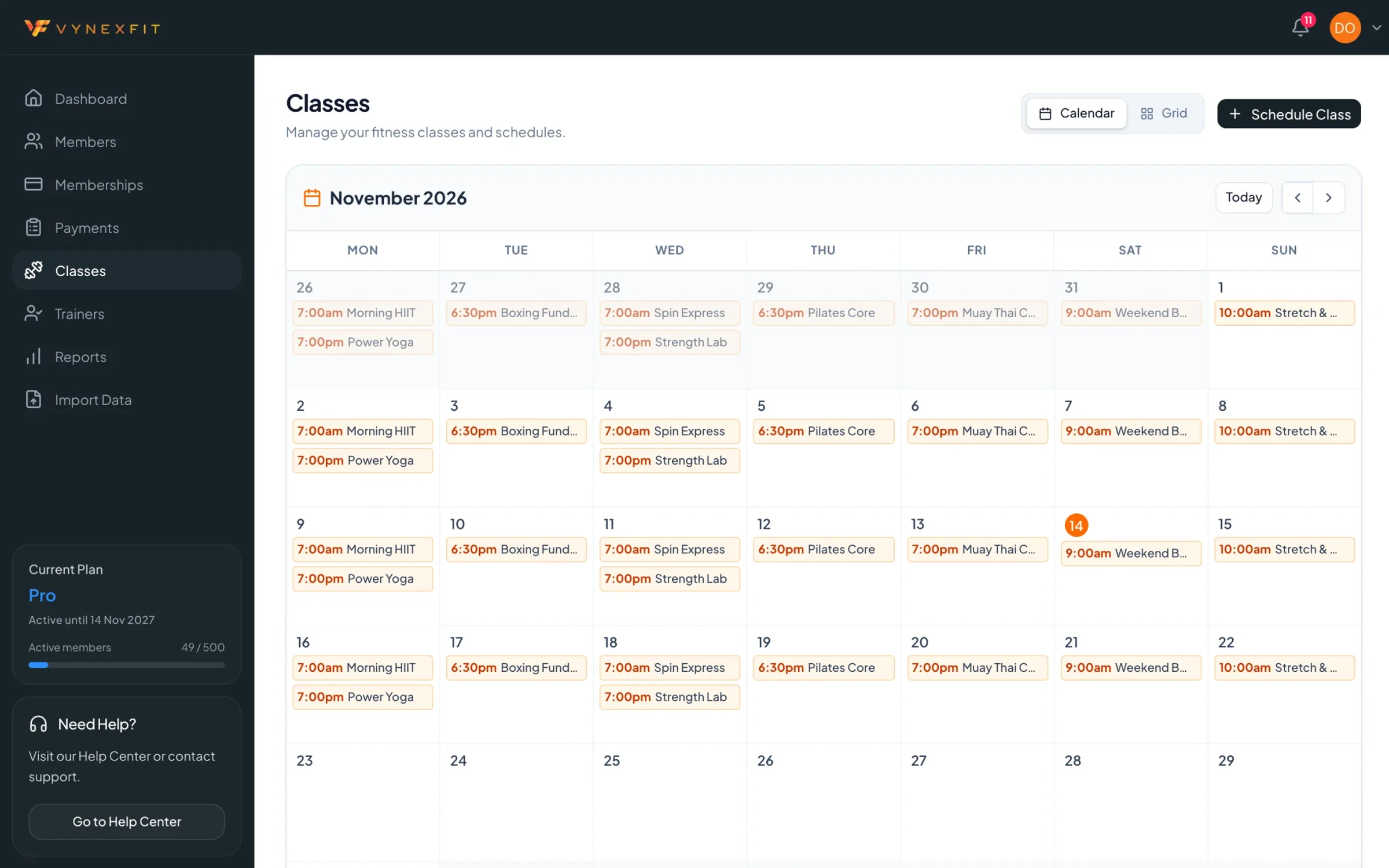
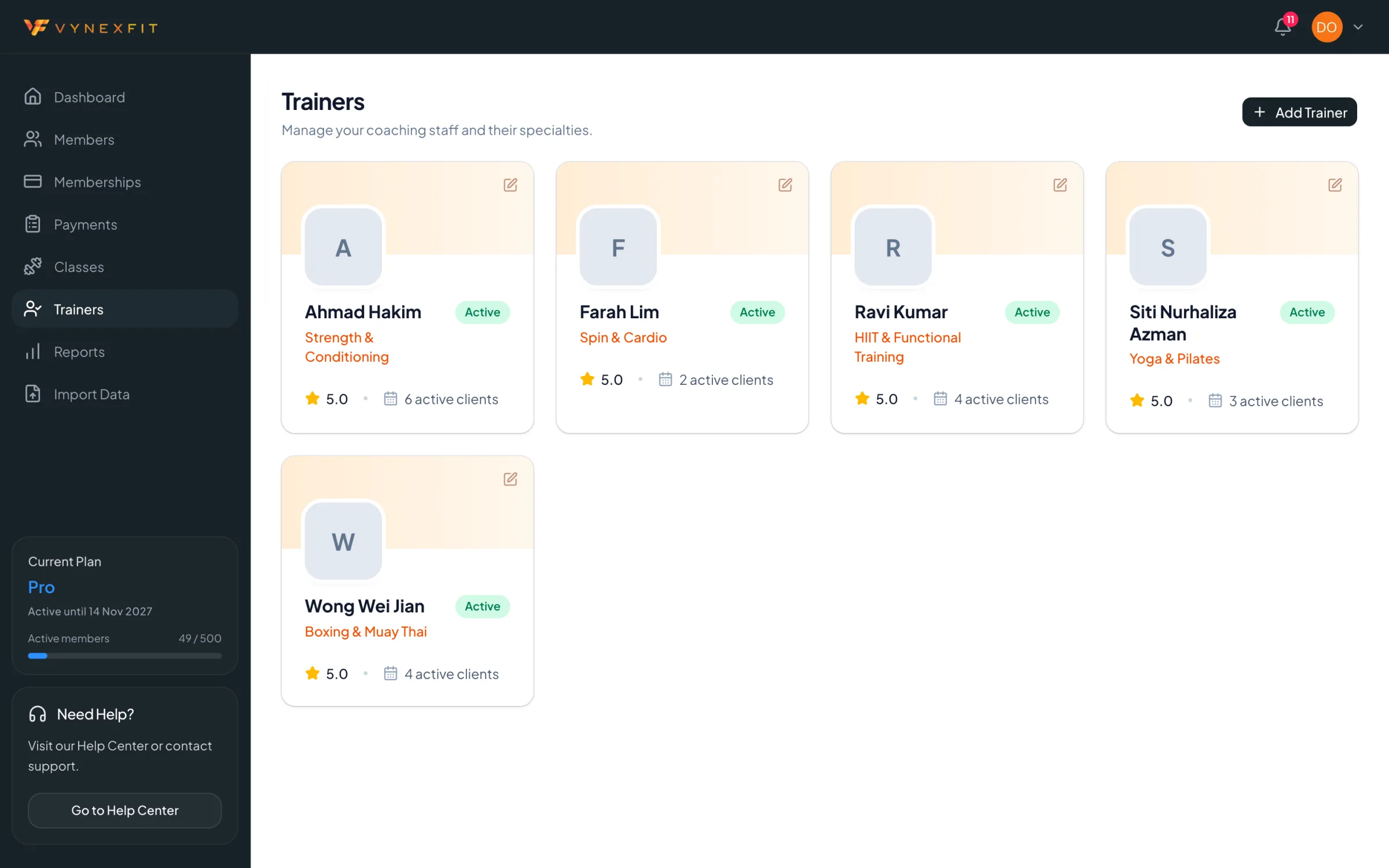
The class calendar shows every class with its trainer, time, location and capacity, in calendar or grid view. Trainer profiles list each coach's specialties, which helps when you're looking for cover. See how class scheduling works.
For payments, overdue members are flagged in colour, and VynexFit sends WhatsApp and email reminders automatically before a membership is due and the day after it becomes overdue. You record each payment against the member, whether it's cash, bank transfer or DuitNow QR, and can issue a branded PDF receipt.
Member profiles keep each student's plan, trainer and billing date in one place, along with a record of their PDPA consent. Monthly reports show revenue, active members, new sign-ups and pending payments, ready for your monthly review.
FAQ
How long should admin take each week?
It depends on the size of your gym. With a clear checklist, most of the daily tasks take a few minutes each, and the weekly review can usually fit into an hour. The aim is to do it in short, regular blocks rather than one stressful catch-up.
Do I really need waivers for a small gym?
It's strongly recommended for any contact sport, whatever your size. A waiver sets expectations about risk and shows you took the matter seriously. Ask a lawyer to review the wording.
Should fight-team students pay a different membership?
Many gyms do charge fight-team students differently, because they train more often and get more coach time. Whatever you choose, write it down and record those fees separately from regular memberships.
Conclusion
Running a Muay Thai, boxing or MMA gym means more than teaching good classes. Coach cover, student records, waivers, payments and hygiene all keep the gym safe and running.
A simple daily, weekly and monthly checklist turns that admin into a routine, so you can spend more time on the mats.